
Venetian Works of Defence in Kotor
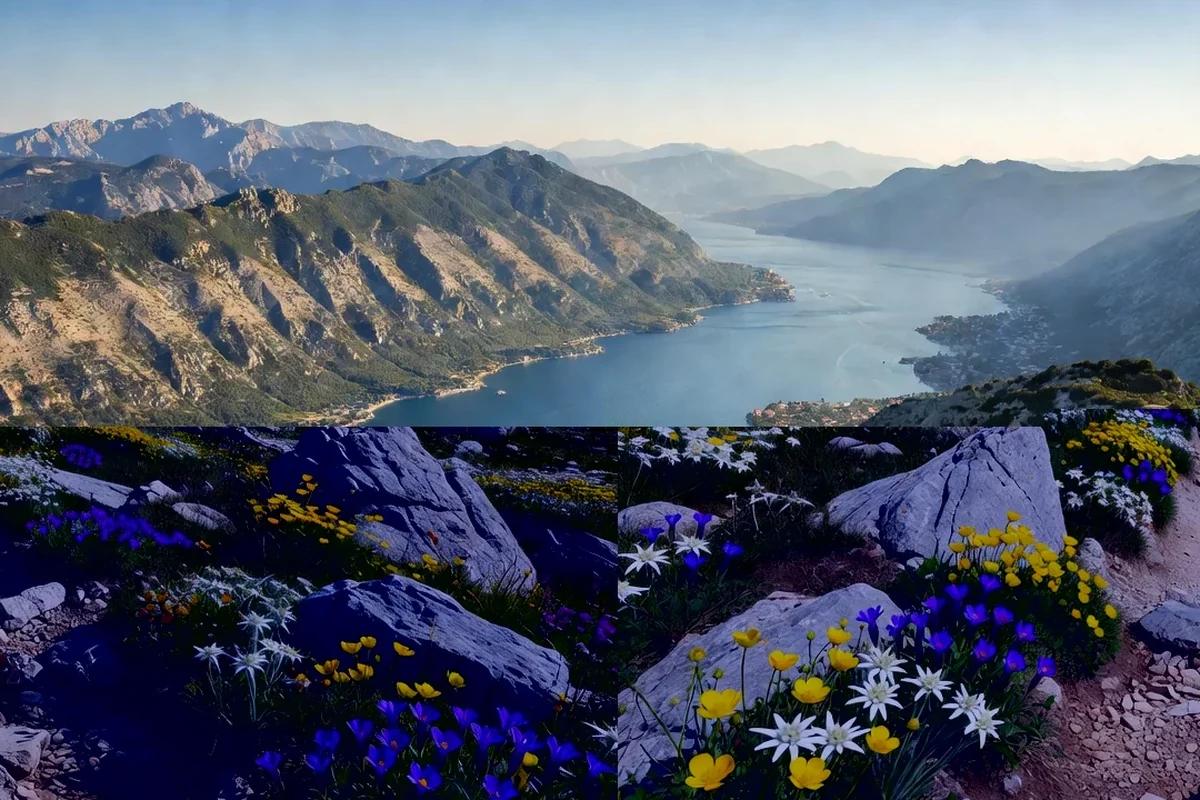
The fortifications above Kotor form part of a much larger World Heritage property inscribed in 2017 under the name Venetian Works of Defence between the fifteenth and seventeenth centuries. The listing is serial and transnational: it groups together the defensive systems built by the Republic of Venice and shared today by Croatia, Italy and Montenegro. Kotor's contribution is the walled circuit that climbs from the old town up the mountain behind it, together with the harbour defences that guarded this enclosed bay.
The listing is unusual because it is about a system rather than a single monument. To understand Kotor's walls, it helps to see them as one element in a chain of fortresses that once controlled the sea routes of the Adriatic.

A republic that defended the sea
Venice built and maintained a network of strongholds along the coasts and islands it controlled, and the surviving works in the Adriatic show how that system was organised. The idea was not to hold a line on land but to control the approaches to ports, straits and bays, protecting trade by guarding the water.
Kotor mattered because the Bay of Kotor is a deep, well-protected inlet with a narrow entrance. Whoever held its forts could supervise the movement of shipping and shelter fleets. That is why the town and its surroundings were fortified repeatedly over many centuries.
The walls above the town
The best-known feature of the site is the line of walls and bastions that rises steeply above Kotor. From the waterfront the fortifications climb the slope in stages, past chapels and platforms, to a ruined fortress at the top. The path up is a long stairway, and the view from the higher sections takes in the whole inner bay, the town below and the mountains beyond.
- The walls climb a steep mountainside in several stages.
- A fortress crowns the ridge above the town.
- The walk up is strenuous and exposed, best done early or late in the day.
- Steps and exposed stone require care when wet.
Harbour fortifications and the sea
Defence was not only about the mountain slope. The sea side had its own works, designed to command the narrow entrance to the bay and the anchorage within it. Towers, gates and a chain of positions were arranged so that attacking ships would face fire from several directions. Much of this is fragmentary today, but the logic is still readable from a boat.
Looking at the site from the water is one of the best ways to understand it. The fortifications were placed to be seen from the sea and to see the sea, and from a boat the relationships between the various positions become obvious.
Building, rebuilding and change
The walls were not designed once and left alone. Over the centuries the defences were extended, repaired and altered, and later rulers adapted them further. Natural events also intervened: the earthquake of 1979 damaged historic structures along the coast, and restoration has continued since.
This long record of change is part of what the World Heritage listing recognises. The value lies in the surviving structure and in the evidence of a system that was constantly maintained to meet new threats.
Practical notes for the climb
The ascent is popular and can be busy in high season. There is a small charge to enter the walled path in much of the year, and the route is open only in daylight. Water, sun protection and sturdy shoes are essential in summer, when the stone reflects heat. Thunderstorms can build quickly and make the exposed steps slippery.
The fortifications in brief
| Element | Description | What to know |
|---|---|---|
| Listing | Venetian Works of Defence | UNESCO World Heritage, 2017 |
| Scope | A transnational serial property | Croatia, Italy and Montenegro |
| Feature | Walls and bastions above Kotor | Reached by a steep stairway |
| Purpose | Control of the bay and sea routes | Defence aimed at the water |
| Condition | Partly ruined, partly restored | Care needed on the steps |
The wider system of defences
Kotor is only one part of the listed property. The same Venetian approach to coastal defence can be read in the fortresses of the Adriatic and further afield, where strongholds were arranged to protect a route or a harbour rather than a frontier on land. Seen together, these works show a coherent military idea that was applied again and again along the sea.
That is why the listing is described as a system. The individual sites gain meaning from one another: the walls above Kotor make more sense when compared with the other fortified towns and harbours that shared the same purpose, and the whole property is greater than the sum of its parts. For a traveller following the Adriatic coast, recognising this pattern turns a series of separate sights into one connected story.
Why the walls still matter
The fortifications above Kotor are more than a scenic staircase. They are the surviving evidence of how a maritime republic organised the defence of an entire sea, and they show how strongly the shape of the bay dictated where walls had to stand. For a visitor who climbs them, the reward is not only the view but the sudden clarity of why this particular place was worth fortifying so thoroughly.
Read next
Natural and Culturo-Historical Region of Kotor
The first property in Montenegro inscribed by UNESCO, and why the bay and its towns were listed together.
Durmitor National Park World Heritage
Plateaus, glacial lakes and the Tara canyon inside a protected mountain massif.
Stećci: Medieval Tombstone Graveyards
A shared transnational listing of carved medieval tombstones found across the western Balkans.