
Stećci: Medieval Tombstone Graveyards
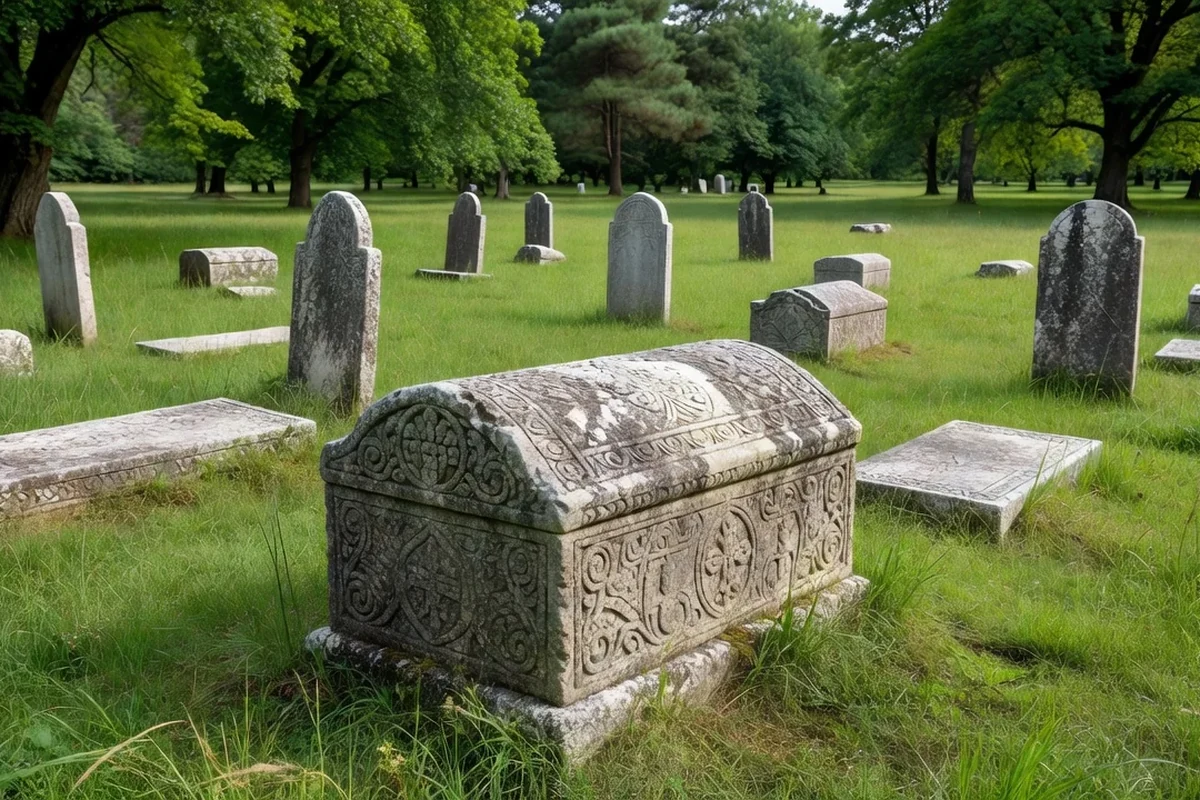
Stećci are medieval tombstones carved from stone and found across the western Balkans, and in 2016 a selection of the most representative graveyards was inscribed on the UNESCO World Heritage List as a shared, transnational property. Four countries took part in the nomination: Bosnia and Herzegovina, Croatia, Montenegro and Serbia. It is a rare example of a listing that is deliberately spread across borders, because the monuments themselves belong to a single cultural tradition rather than to one modern state.
For a visitor, the stećci graveyards are quiet, open-air sites where sculpture, landscape and history meet. They are not grand ruins but fields of carved stones in villages, on hillsides and beside old roads, and their interest lies as much in the carvings as in the settings.
What stećci are
The word stećak refers to a type of monumental tombstone made mostly between the twelfth and the sixteenth centuries. The stones vary in shape: simple slabs, chest-like blocks, tall standing stones and forms with a raised base. Many carry no names, and where there are inscriptions they are in a local script and language of the period, so the graves cannot always be tied to specific people.
What makes them special is the carving. Some stones are plain, but many are decorated with figures, animals, plants, scenes of hunting or dancing, and geometric patterns. These images are among the most distinctive artistic expressions of medieval south-eastern Europe.
Montenegro and the shared listing
Montenegro is one of the four states sharing the property, and its contribution is the graveyards found within its territory. The listing does not protect every stećci site, only a chosen set judged outstanding and best preserved. Together these selected graveyards illustrate the full range of forms and carvings.
- The property is serial: it consists of many separate sites in several countries.
- Only the most representative graveyards were nominated.
- Each country is responsible for the parts within its own borders.
- Management plans cover conservation, access and interpretation.
How a graveyard is arranged
Stećci usually stand in groups rather than one by one. A graveyard may hold a few stones or several hundred, arranged in loose rows or clustered on a slope. Some lie beside medieval churches or along former routes, which suggests the stones marked burial grounds for communities that lived and travelled through the area.
Because the stones weather differently depending on the rock, some graveyards look pale and crisp and others dark and mossy. Both are authentic; the condition reflects centuries of exposure, not neglect.
Reading the carvings
The decoration repays careful looking. A carved hand, a crescent, a sword or a ring may mark a trade or a status. Figures on horseback, lines of dancers holding hands and stylised plants recur across sites. Scholars continue to debate the meanings, and much remains uncertain, which is exactly why the stones are so intriguing.
Carved inscriptions, where they survive, are usually short. They are not lengthy accounts but brief lines that add a name, a title or a fragment of memory, and they are often quoted in travelling accounts purely for the glimpse they give of a distant life.
Protecting and visiting the graveyards
Stećci are fragile. Stone exposed for centuries is vulnerable to frost, water and feet, and walking or standing on the monuments causes real damage. Visitors should look from the paths, keep clear of the stones and treat the places as cemeteries, which they are, rather than as photo props.
Many sites are in open landscapes with no ticket office and no fence, so protection depends largely on respect. Local communities and heritage bodies maintain them, and the World Heritage listing brings international attention that supports conservation.
The medieval tombstones in brief
| Element | Description | What to know |
|---|---|---|
| Name | Stećci, medieval tombstones | A shared Balkan tradition |
| Inscribed | Selected graveyards | UNESCO World Heritage, 2016 |
| States | Bosnia and Herzegovina, Croatia, Montenegro, Serbia | Transnational property |
| Period | Mostly twelfth to sixteenth centuries | Dates are approximate |
| Interest | Carvings, inscriptions, setting | Fragile, so view from paths |
Looking after the stones
Conservation of the stećci is not only about cleaning. Because the monuments are outdoors and often in fields or on slopes, they face frost, plant growth, water and, increasingly, the wear caused by visitors. Good practice means avoiding physical contact with the carved surfaces and supporting the local arrangements that keep livestock and traffic away from the most fragile stones.
The shared World Heritage listing has helped draw attention and expertise to these sites, and each country manages the graveyards inside its own borders. For a traveller, the practical contribution is simple: visit respectfully, follow any local guidance, and leave the monuments exactly as they were found.
Why they matter
The stećci graveyards are one of the clearest surviving records of medieval life in a region that modern borders have divided differently. They show how people buried their dead, what they carved and what they cared to remember. Visiting them is a lesson in looking closely, because the meaning of these quiet fields of stone is not written on a sign but carved into the stones themselves.
Read next
Natural and Culturo-Historical Region of Kotor
The first property in Montenegro inscribed by UNESCO, and why the bay and its towns were listed together.
Durmitor National Park World Heritage
Plateaus, glacial lakes and the Tara canyon inside a protected mountain massif.
Venetian Works of Defence in Kotor
The fortifications above the town, listed as part of a wider Venetian defence system.