
Primeval Beech Forests of Biogradska Gora

Biogradska Gora is a national park in the Bjelasica mountains of central Montenegro, and it contains one of the last remaining areas of primeval forest in Europe. That forest led to a wider recognition: in 2017 the site was added to the World Heritage List as part of the Primeval Beech Forests of the Carpathians and Other Regions of Europe, a serial property that stretches across many countries and now includes Montenegro.
The listing is a good example of how World Heritage can work at the scale of a natural process. It does not protect a monument but a living forest that is allowed to develop largely on its own terms, and the individual sites across Europe together illustrate the history and spread of beech.
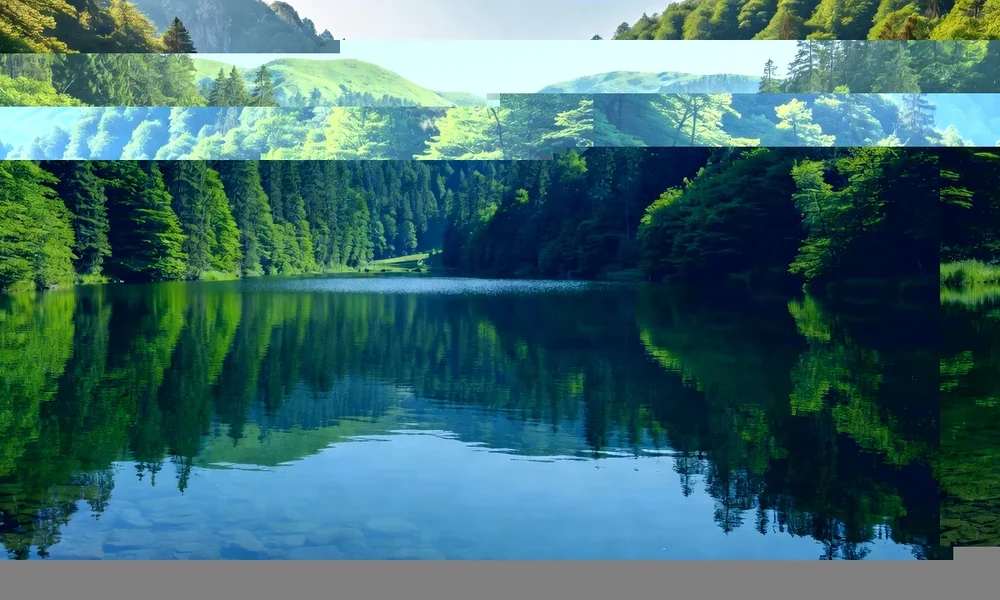
A forest left to itself
In much of Europe, forests have been cut, planted and managed for centuries, so a woodland that develops without human intervention is rare. Biogradska Gora is celebrated for preserving an area of just such untouched forest, where old trees fall and decay naturally and new growth responds on its own. This absence of management is the core of its value.
Walking through such a forest feels different from walking through a managed one. There is more dead wood, more variety in age and structure, and a greater sense of a process continuing without a plan.
Beech and the Europe-wide property
The beech is one of the most widespread trees of Europe, and its expansion after the last ice age is a story that spans the whole continent. The World Heritage property was created to represent that story through carefully chosen forest areas, beginning in the Carpathians and later extended to other regions. Biogradska Gora is one of the protected sites that carries the beech story in the Balkans.
- The property is serial: it consists of many separate forest areas.
- It began with the Carpathian beech forests and was later extended.
- Each area is chosen for its natural quality and its place in the wider picture.
- Montenegro's forest is one of the sites that widened the property's geographic range.
The lake at the centre
The park is best known to visitors for Biogradsko Lake, a mountain lake set among the trees and easy to reach from the park entrance. Paths run around it, and a short walk gives a first look at both the water and the surrounding woodland. The lake is the natural starting point for almost every visit.
Around the lake, marked trails lead further into the park, toward viewpoints and higher ground. The forest and the water sit side by side, and the combination is what most people remember.
Mountains and summer pastures
The Bjelasica range around the park is gentler than the limestone giants further west. Its ridges are rounded and green, and in summer the higher ground turns into pasture where livestock graze, continuing a long local tradition. The contrast between deep forest, open pasture and quiet lake gives the park its particular character.
Because the terrain is less harsh than in some other Montenegrin mountains, the park suits walkers who want moderate routes rather than technical climbs, while still offering bigger days for those who look for them.
Protection and rules
Primeval forest is fragile. Soil and fallen trees are easily disturbed, and a single careless path can scar a site that took centuries to form. Park rules therefore ask visitors to stay on marked trails, take nothing away and leave nothing behind. The forest is protected precisely because it is allowed to be unmanaged, and human traffic is the main pressure on it.
Biogradska Gora in brief
| Element | Description | What to know |
|---|---|---|
| Location | Bjelasica mountains | Central Montenegro |
| Status | National park | Primeval forest protected |
| World Heritage | Primeval Beech Forests property | Added to the listing in 2017 |
| Highlight | Biogradsko Lake | Paths circle the water |
| Activity | Walking and nature study | Stay on marked trails |
How a primeval forest works
In an unmanaged forest, trees are not harvested on a cycle. They grow, compete for light, age, die and fall, and the gaps they leave allow younger trees to rise. Dead wood stays where it falls, breaking down slowly and feeding the soil and an entire community of insects, fungi and birds. This cycle is what gives a primeval forest its structure and its richness, and it is exactly what ordinary forestry interrupts.
The result is a wood with trees of many ages standing together, patches of dense shade and patches of new growth, and far more dead wood than a managed forest would tolerate. For scientists the site is a reference, a place where natural processes can be studied without human interference. For visitors it is a quiet lesson in how much happens in a forest when nothing is done to it.
Beyond the famous forest, the park protects a mountain landscape of ridges, streams and summer pastures. The combination of untouched woodland, open high ground and a clear lake makes it a rare and compact example of central Montenegro's natural heritage, and a reminder that protection is sometimes simply a decision to leave a place alone.
Why the forest matters
Biogradska Gora offers a rare chance to see what a European forest can become when people do not manage it. That is a scientific value and also a quiet kind of experience: a wood that is old, diverse and self-willed, kept as it is for the future and shared with the wider European story of the beech.
Read next
Natural and Culturo-Historical Region of Kotor
The first property in Montenegro inscribed by UNESCO, and why the bay and its towns were listed together.
Durmitor National Park World Heritage
Plateaus, glacial lakes and the Tara canyon inside a protected mountain massif.
Stećci: Medieval Tombstone Graveyards
A shared transnational listing of carved medieval tombstones found across the western Balkans.