
Getting Around Montenegro
Montenegro is small on the map, but its roads are mountainous and winding, so distances take longer than they look. Getting around therefore depends on choosing the right type of transport for the route and the season, and on accepting that some journeys will be slow. Buses, a limited railway, ferry crossings and rental cars each have their place.
Most visitors combine modes of transport rather than relying on one. A rented car gives freedom in the mountains, while buses and ferries handle the coast and the main towns. Understanding this mix is the key to moving around the country comfortably.
Buses
Buses are the backbone of public transport in Montenegro. They link the coast, the capital and the larger towns, and they also connect the country with its neighbours. On the main routes services are reasonably frequent, though timetables are seasonal and some lines run only in summer.
For travellers without a car, buses make it possible to see a great deal. The limitation is reach: many mountain villages and remote stretches of coast are not served directly, and getting to them may require a combination of buses, taxis and walking.
The railway
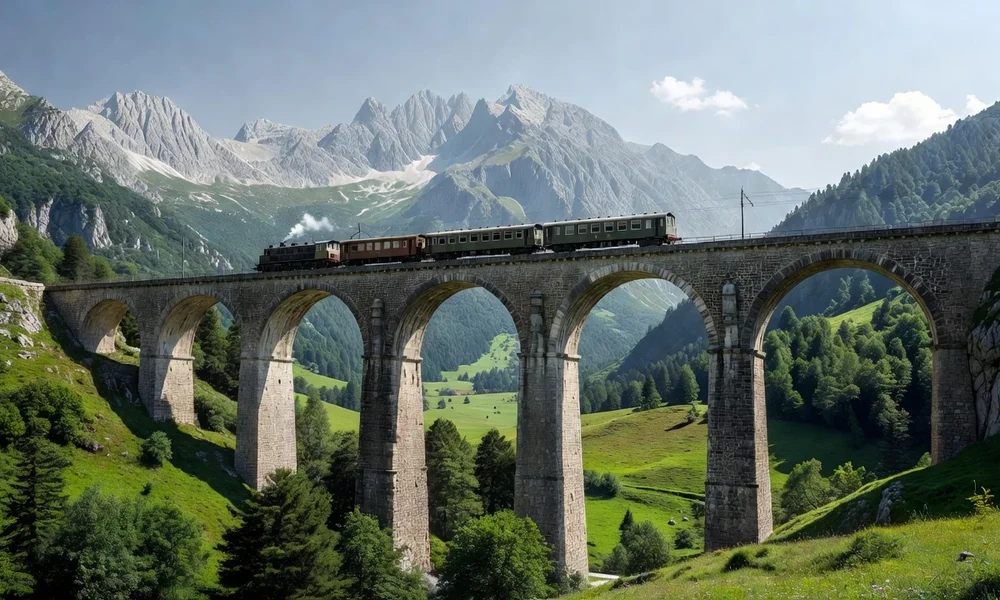
Montenegro's railway runs from the interior to the coast and links with the wider regional network. The mountain section is famous for its engineering and its scenery, with long tunnels and high viaducts, and it is worth riding for the view as much as for the transport. Services are not frequent, and the network does not cover the whole country, but on the routes it serves the train is comfortable and reliable.
- Buses cover most towns and the coast.
- The railway links the interior with the coast.
- Trains are limited in coverage but scenic.
- Ferries shortcut the Bay of Kotor entrance.
Ferries and boats
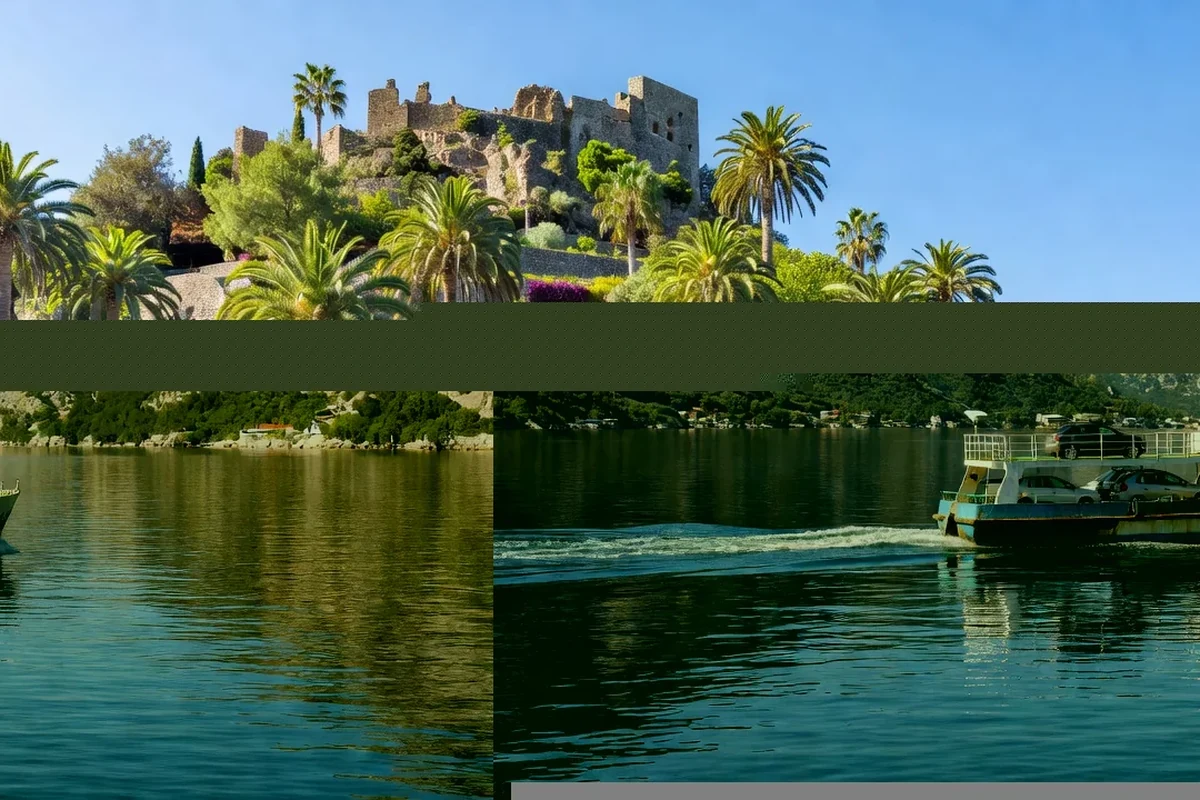
Water is part of the transport system as well as the scenery. A short car ferry crosses the entrance to the Bay of Kotor, saving a long drive around the inlet, and larger sea routes connect the port of Bar with Italy. Along the bay and the coast, small boats and excursion craft provide local links and access to places that are easier to reach by water.
Using the ferry across the bay is one of the most practical tricks of travelling here, because it turns a long detour into a few minutes on the water. Timetables are simple and crossings are frequent during the day.
Driving and rental cars
A rental car is the most flexible way to explore, especially in the mountains where public transport is sparse. Roads are generally in reasonable condition on the main routes, but mountain roads are narrow, winding and sometimes steep, with sharp bends and limited barriers. Driving standards vary, and patience is required.
Drivers should be ready for tunnels, hairpin bends and slow traffic in summer, and should allow generous time between destinations. Parking in the historic towns and popular coastal resorts can be difficult in peak season, and some areas restrict vehicles for environmental reasons.
Taxis and local transport
In towns, taxis are available and can be useful for short journeys or for reaching a trailhead or a viewpoint. Local buses also serve many towns, though their schedules may be limited. Agreeing a fare in advance or using a meter avoids misunderstandings, and in the busiest resorts local transport is often easier than driving.
For the last stretch to a remote beach, monastery or gorge, a taxi and a pre-arranged return can be the simplest solution when no bus runs there.
Transport compared
| Mode | Best for | Limitations |
|---|---|---|
| Bus | Towns and coast | Sparse in remote areas |
| Train | The interior-to-coast route | Limited network |
| Ferry | Crossing the bay | Only short crossings |
| Rental car | Flexibility and mountains | Winding roads, parking |
| Taxi | Short local journeys | Cost adds up quickly |
Combining modes of transport
In practice, the smoothest journeys mix transport rather than relying on one. A traveller might take a bus between the main coastal towns, use the ferry across the bay, and hire a car for a few days in the mountains where public transport is sparse. This approach uses each mode for what it does best and avoids the cost and difficulty of keeping a car in the crowded resorts.
It also suits the shape of the country, where the coast is well served by public transport but the interior is not, and where a short sea crossing can replace a long detour by road. Planning journeys this way takes a little more thought, but it usually produces a trip that is cheaper, easier and more interesting than a single method would allow.
Practical advice
The most useful habit is to allow more time than the distance suggests. A road that looks short on the map may take twice as long because of the terrain. Checking timetables and conditions in advance, especially in the mountains and out of season, prevents wasted days.
Whichever mode you use, respect the local rules, drive carefully on mountain roads, and be prepared for services to be limited away from the main centres. With realistic expectations, getting around Montenegro is part of the pleasure of the trip rather than an obstacle to it.
Read next
Getting to Montenegro
Airports, overland routes and sea connections, and how they shape an itinerary.
The Best Time to Visit
Coast and mountains have different seasons; what to expect month by month.
A Coastal Itinerary
A route down the Adriatic shore, from the Bay of Kotor to the southern beaches.