
A Coastal Itinerary
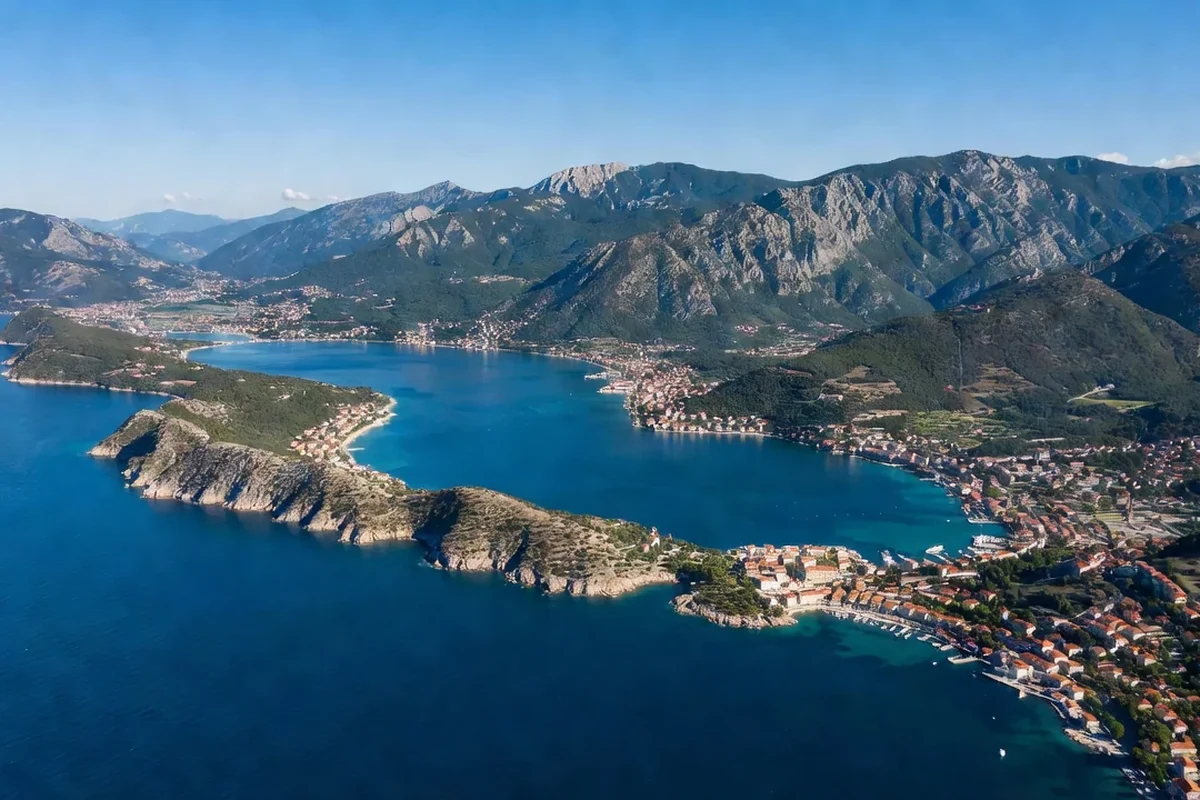
Montenegro's coast is short but varied, running from the Bay of Kotor in the north to the sandy southern shore near Albania. A coastal itinerary that follows it from end to end fits comfortably into a week, with time for historic towns, boat trips, beaches and a mountain excursion above the bay. The route is logical because the coast is a single line, and each stop leads naturally to the next.
The itinerary below can be shortened or stretched, but its order follows the geography and avoids backtracking. It begins in the bay, moves along the riviera and finishes in the south.
Starting in the Bay of Kotor
Begin at Kotor, at the head of the bay, where the old town, the walls and the waterfront make an immediate impression. From Kotor, a boat or a short drive reaches Perast and its two islets, and a road climbs to the plateau of Lovćen for views over the whole inlet. This first stage is unhurried and rich in heritage.
The bay rewards time on the water. A boat trip gives a different sense of the scale of the mountains and the towns, and it links places that are awkward to reach by road.
Herceg Novi and the bay entrance
Moving toward the open sea, Herceg Novi stands at the entrance of the bay, a town of steps and gardens facing the Adriatic. From here the coast opens out, and the short ferry across the bay presents a useful shortcut. This is the natural transition from the enclosed inlet to the open coast.
- Start at Kotor, the head of the bay.
- Visit Perast and its islets by boat.
- Climb to Lovćen for the view.
- Continue to Herceg Novi at the entrance.
Budva and the riviera
South of the bay lies the Budva riviera, with its old town on a peninsula and a long series of beaches and coves. Budva is the liveliest part of the coast, offering history inside the walls and resort life outside them. Nearby Bečići and other small resorts continue the beach theme, and the area is a good base for a few days.
From Budva it is easy to make short excursions, whether along the coast or inland toward the mountains, which makes it a convenient midpoint for the whole itinerary.
Toward the south
Continuing south, the coast passes through further settlements and beaches before reaching Bar, a port town with a historic core and a longer history than its modern appearance suggests. Beyond Bar the landscape changes, and the coast becomes greener and quieter as it approaches the southern border.
Each stop along this stretch has its own character, and the pace can slow as the crowds of the central riviera fall away. This is the part of the coast where a car or a bus makes the most difference, because services thin out.
Finishing at Ulcinj
The itinerary ends at Ulcinj, the southernmost town, with its walled old town on a hill, its long sandy beach and the lagoon behind it. It is a fitting conclusion, because it offers something the rest of the coast does not: sand, wetland and a distinctly southern culture close to the Albanian border.
From Ulcinj it is possible to continue into Albania or to turn back north. Either way, the coast has been seen from end to end, from the enclosed bay to the open southern shore.
The coastal route in brief
| Stop | Character | Main interest |
|---|---|---|
| Kotor | Historic bay town | Old town and walls |
| Perast | Baroque waterfront | Islets and churches |
| Herceg Novi | Terraced garden town | Entrance to the bay |
| Budva | Resort with an old core | Beaches and history |
| Ulcinj | Southern coast town | Sand, walls and lagoon |
Practical notes
The coast can be travelled by bus, by car or by a combination of both, with boats for the bay. In summer the roads are busy and parking is difficult, so public transport is often easier in the resorts. Outside the peak season the whole route is quieter and easier to enjoy.
It is worth allowing more time than the distances suggest, because the coastal road can be slow, and leaving room for an unplanned stop often produces the best moments of the trip. Whatever the season, respect the towns, the beaches and the protected sites, and take the coast at a pace that lets you notice it.
How long to allow
The full route can be covered in about a week at a comfortable pace, or compressed into a few days with longer drives and less time at each stop. It also works in reverse, beginning in the south and finishing in the bay, which suits travellers arriving from Albania or the far south. The important thing is to leave room for the unplanned: a boat trip, a longer walk in an old town or an extra evening by the water.
Adding a mountain excursion above the bay, such as the climb to Lovćen, is one of the best ways to break up the coastal stages and to see the coast from above. With a little flexibility, the itinerary becomes a framework rather than a schedule, and the trip is better for it.
Why this route works
The coastal itinerary works because it follows a natural line and mixes different kinds of place: a mountain-ringed bay, historic towns, a busy riviera and a quiet southern shore. It needs no complicated planning, and it can be adjusted to suit any length of trip. For a first visit to Montenegro, it is the simplest way to see the best of the coast.
Read next
Getting to Montenegro
Airports, overland routes and sea connections, and how they shape an itinerary.
The Best Time to Visit
Coast and mountains have different seasons; what to expect month by month.
Getting Around Montenegro
Buses, ferries, trains and rental cars, and the roads that link coast and mountains.