
Kotor in cruise season: planning around the crowds
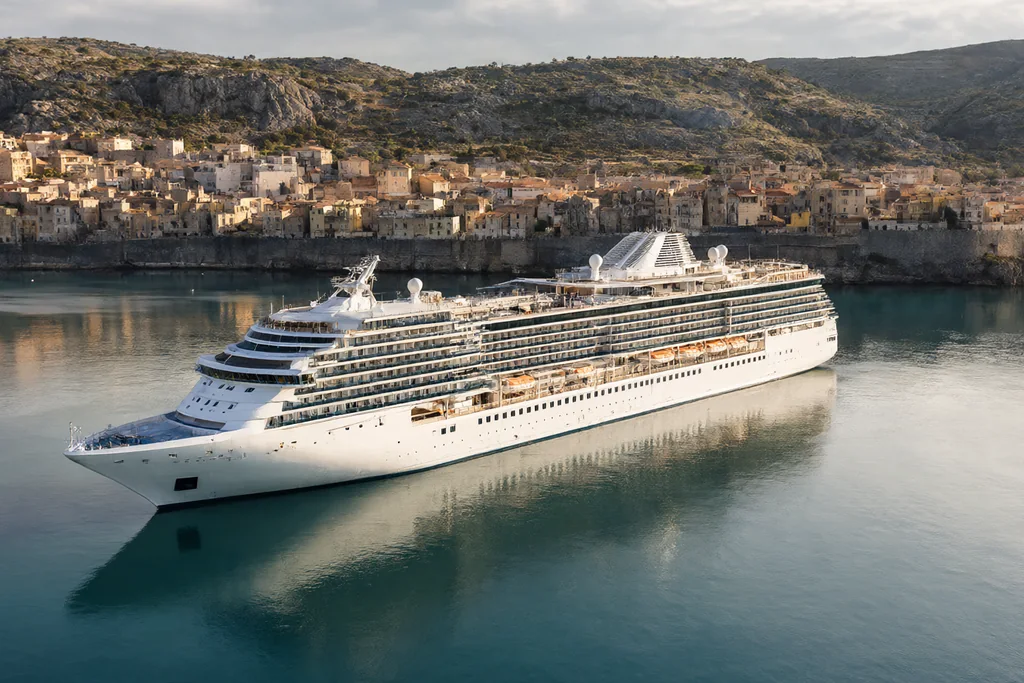
Kotor receives a large share of its visitors from the sea, and the pattern of a summer day in the old town is set less by the town than by the ships tied up at the quay a few minutes away. Understanding that rhythm is the difference between a pleasant morning and an hour spent shuffling behind a raised umbrella.
None of this requires special access or local contacts. It requires timing, a pair of comfortable shoes and a willingness to walk uphill.
The shape of a cruise day
Ships rarely stay long, and their passengers tend to move in a curve: a burst of activity in the morning as excursions leave, a lull while groups are away at other sites, and a second wave in the early afternoon before all aboard. The old town is small enough that the difference is felt immediately in the narrow lanes between the cathedral and the squares.
Two or three ships on the same day is enough to fill the main route from the Sea Gate to the Cathedral of Saint Tryphon. On a quiet day the same street is almost empty, and the town feels like the small walled settlement it still is. Ships either berth at the quay or anchor out and run tenders in, and that difference shows in the timing of the first wave at the gate.
Early morning is the whole trick
The single most useful piece of advice is to be inside the walls before the first tenders and coaches disgorge. Arriving at opening time gives you the squares in flat light, the bakeries before the queue, and the chance to climb the walls before the stone gets hot.
- Walk the town first, while the shutters are still coming up.
- Climb towards the fortress early, not at midday, for heat and crowd reasons alike.
- Save museum interiors for the middle of the day, when the groups are outdoors.
- Keep the waterfront for the evening, after the ships have sailed.
Gates, lanes and the way up
Kotor is entered through three historic gates. The Sea Gate faces the port and takes almost all the foot traffic; the North Gate and the South Gate sit at either end of the old town and are usually calmer. Using them costs you nothing but a short walk around the outside of the walls, and it deposits you in the same lanes from the other direction.
The climb to the fortifications above the town starts near the northern side. It is a long flight of stone steps and rough path, exposed for most of its length. Go early, carry water, and turn round if the rock is wet, because the surface is polished by centuries of feet and slippery in rain.
Parking inside the walls does not exist in any practical sense. Cars stop outside and the rest is on foot, which is one more argument for arriving before the day fills up.
Perast as the alternative
When the town is full, the bay offers a straightforward escape. Perast sits further along the shore, a single street of baroque houses facing two small islands, and it absorbs people far better than Kotor's lanes do. Boats run out to Our Lady of the Rocks, and the waterfront has enough length that a crowd disperses instead of compressing.
The same logic applies to Risan at the head of the bay, and to the villages on the opposite shore. The bay is not a single destination; it is a ring of settlements connected by road, ferry and, in season, by boat.
Heat, water and the middle of the day
Summer afternoons in the bay are hot and still, and the stone holds the heat. The middle of the day is the right time to be indoors, in a church, a museum or a shaded courtyard, or to be in the water. Plan the physically demanding part of the day for either end of it.
| Window | Where to be | Why it works |
|---|---|---|
| Early morning | Old town lanes, then the walls | Cool stone, few people, best light |
| Late morning | Perast or the far shore | Groups concentrate in Kotor |
| Midday | Church and museum interiors | Shade and a reason to slow down |
| Afternoon | Water, or a long lunch | Heat and the second wave of visitors |
| Evening | Waterfront, squares | Ships gone, town returns to itself |
The table is rough guidance, not a schedule. Ship movements change with the season and with the weather, and a port day that looks busy on paper can be quiet if a call is cancelled.
Days when the ships are absent
Kotor is not only a port. Out of season the town is a working small city with a university, a market and a resident population, and the experience is completely different: quieter, cheaper, and considerably wetter between autumn and spring. Winter rain is part of the character of the bay, and the walls in mist are worth the soaking.
If your dates are flexible and crowds are the concern, the shoulder months are the answer. If they are not, timing within the day does most of the work. Check the port schedule published by the local port authority before you fix a plan, and treat it as indicative, since calls are added and dropped throughout the season.
Read next
Montenegro's UNESCO list: four inscriptions explained
Montenegro holds four World Heritage inscriptions. What each one protects, how the shared properties work, and what a listing does and does not mean.
Durmitor before you hike: what to check first
Trail marking, late snow, entrance fees, water on the karst plateau and afternoon storms: what to confirm before walking in Durmitor National Park.
One week, four UNESCO sites: a Montenegrin route
A seven day Montenegrin route linking Kotor, the Venetian fortifications, Durmitor and the stećci graveyards, with transport notes and booking advice.