
Ulcinj and the Southern Coast
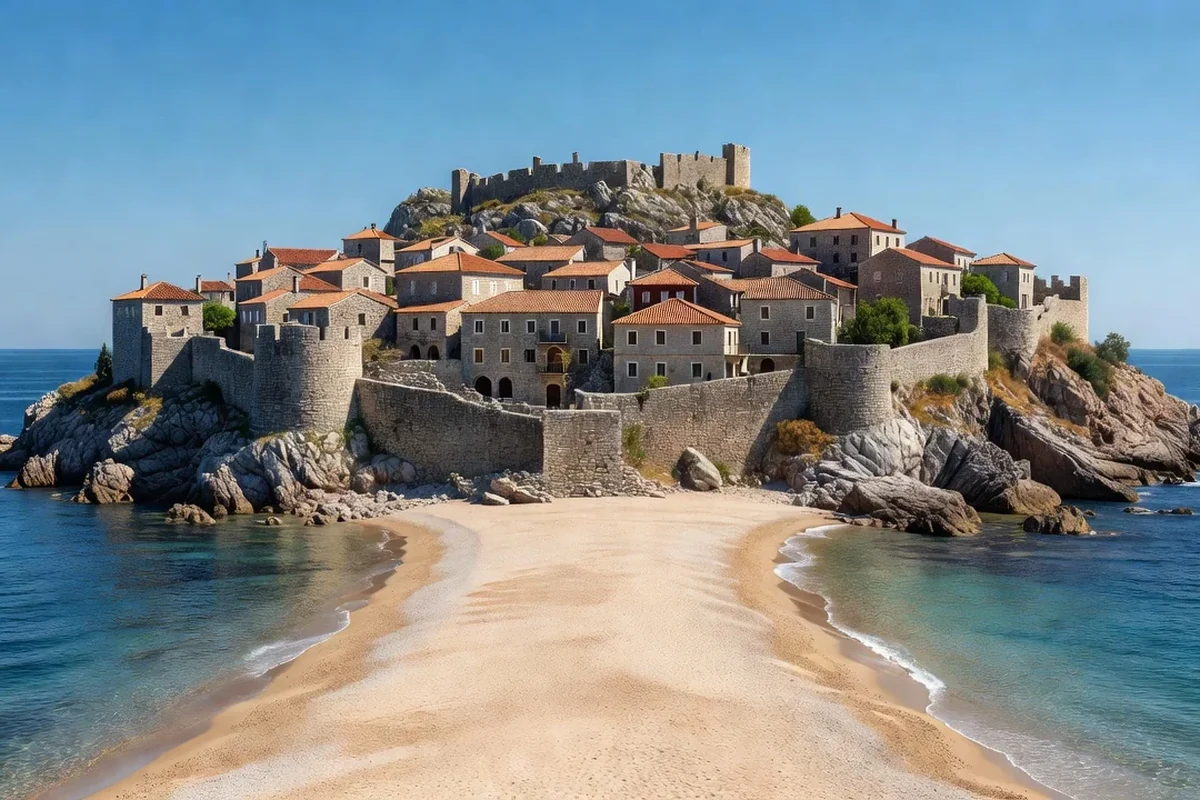
Ulcinj is the southernmost town of the Montenegrin coast, close to the border with Albania, and it differs in character from the resorts further north. It has an old walled town on a hill above the sea, a long stretch of sandy beach nearby, and a large lagoon behind it that is important for wildlife. The mix of history, sand and wetland gives Ulcinj a distinct identity on a coast that is otherwise more pebbly and more developed.
The town is one of the oldest settlements in the area, and its position at the southern end of the coast has always made it a meeting point of influences. That history is still visible in the old town, while the beaches and the lagoon make it a destination for travellers who want nature as much as nightlife.
The old walled town
Ulcinj's old town sits on a rocky hill overlooking the sea, enclosed by walls and full of narrow lanes, old houses and small squares. It has been fortified since ancient times and has changed hands many times, which is why its architecture shows a range of influences. From the walls there are wide views along the coast and out to sea.
Parts of the old town are ruinous and parts have been restored, and it remains a quiet, lived-in place rather than a tidy monument. Walking its lanes in the evening, when the light softens and the crowds thin, is one of the town's great pleasures.
The long sandy beach
Ulcinj is known for its long sandy beach, one of the finest on the Montenegrin coast and unusual because so much of this shore is pebble or rock. The beach stretches for a considerable distance and is backed by low ground, making it popular with families and with anyone who prefers sand to shingle. In summer it is lively, with cafes and water sports along its length.
- The old town stands on a hill above the sea.
- A long sandy beach lies close to the town.
- The coast here is sandier than elsewhere in Montenegro.
- The large lagoon behind the town is rich in wildlife.
The lagoon and its birds
Behind the town lies a large lagoon, separated from the sea by a narrow strip of land. This is a major wetland, important for birds and for the wider ecology of the coast. It is a quieter sort of attraction than the beach: best explored slowly, by boat or on foot, and rewarding for anyone interested in nature.
The lagoon is also used for fishing and for traditional activities, so a visit combines wildlife with a working landscape. As with other wetlands, the best times are early morning and evening, when birds are most active and the place is at its calmest.
Culture and community
Ulcinj has a distinct cultural character, shaped by its location near the border and by its history. The town has long been home to a mixed population, and this is reflected in its buildings, its food and its traditions. The old town, the mosques, the churches and the waterfront all tell part of that story.
For a visitor, this diversity is part of the appeal. Ulcinj feels different from the northern resorts, quieter and more rooted in the life of the southern coast, and it rewards an interest in people and place as much as in scenery.
Ulcinj in brief
| Element | Description | What to know |
|---|---|---|
| Position | Southernmost town of the coast | Near the Albanian border |
| Old town | Walled hilltop settlement | Ancient and layered |
| Beach | Long stretch of sand | Unusual for this coast |
| Lagoon | Large wetland behind the town | Important for birds |
| Character | Mixed southern culture | Quieter than the north |
Practical notes for a visit
Ulcinj is reached by road along the coast, and the journey from the central resorts is straightforward. The town has a range of accommodation, and its beach and lagoon are close enough to combine in a single visit. Summer is hot and busy, while spring and autumn offer gentler conditions and more space.
Visitors should respect the old town as a residential place, follow the rules of the beach and the lagoon, and remember that the wetland is a protected natural area as well as a working landscape. Boats and guides should be chosen from reputable operators with prices agreed in advance.
The river mouth and the pine shore
South of the town, a river reaches the sea and forms a sandy delta, an unusual feature on this coast. The area includes a long spit of land and a wooded shore where pine trees grow close to the beach, giving the southern end of the coast a greener, more enclosed feeling than the open sand further north. The river, the sea and the vegetation together create a distinctive landscape.
This stretch is also a place of seasonal contrasts. In high summer it is busy and lively, while at other times it is quiet and almost empty, used mainly by local people and by birds. For visitors it is a reminder that the Montenegrin coast is not only historic towns and resort beaches but also river mouths, wetlands and woods, each with its own character and its own rules.
Why Ulcinj stands apart
Ulcinj offers a southern, more varied version of the Montenegrin coast: an ancient walled town on a hill, a rare stretch of sand and a large lagoon full of birds, all within a short distance of one another. It is a place where history, nature and daily life sit comfortably together, and for travellers willing to go a little further south, it is one of the most rewarding stops in the country.
Read next
Kotor Old Town
Squares, churches and lanes inside the walled town at the head of the bay.
Budva Old Town and the Riviera
A small fortified peninsula and the long stretch of coast that carries its name.
Herceg Novi
A hillside town of steps and gardens guarding the entrance to the Bay of Kotor.