
Kotor Old Town
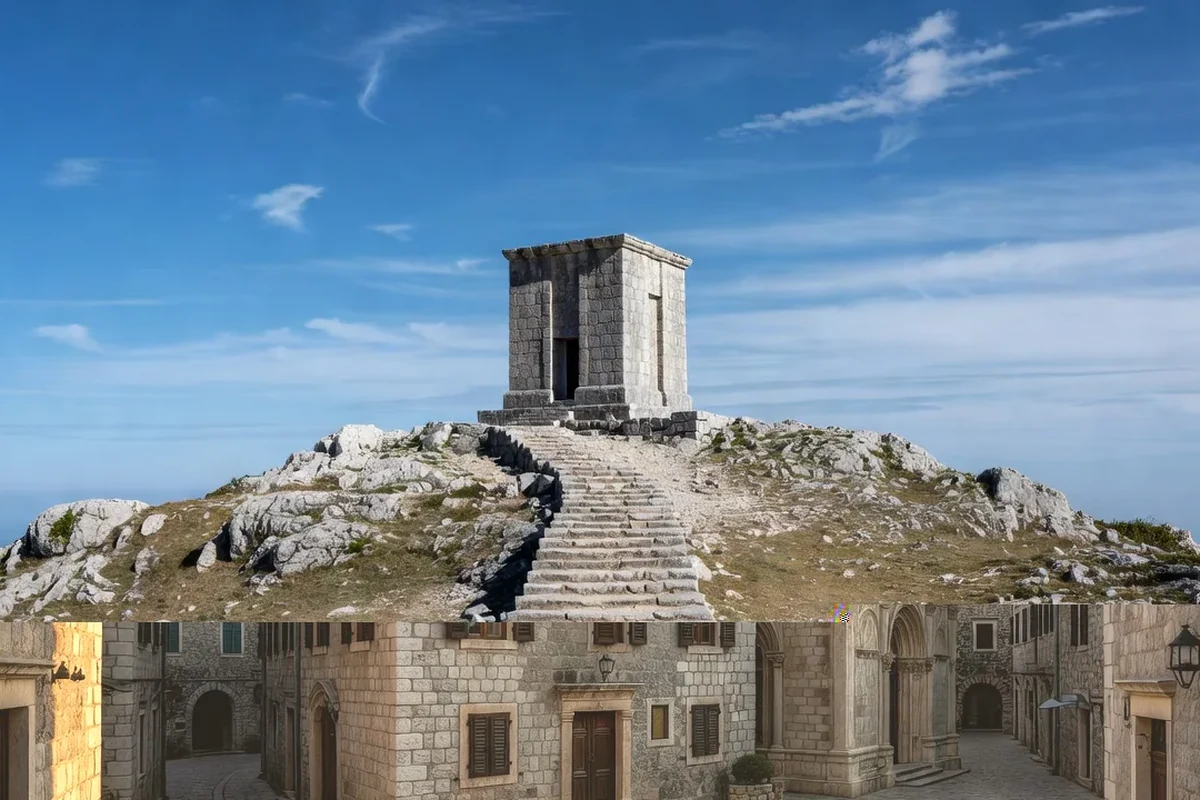
Kotor is the town at the innermost point of the Bay of Kotor, pressed between the calm head of the inlet and the steep mountain that rises behind it. Its old town is a compact maze of squares, lanes, churches and palazzi, enclosed by walls that climb the slope to a ruined fortress above. For centuries it was a maritime and trading centre, and its prosperity left behind a dense and layered historic core that is now part of the UNESCO World Heritage region of Kotor.
Walking Kotor is the best way to understand it. The old town is small enough to cross on foot in a few minutes, but the lanes are so tightly packed and so irregular that it rewards slow exploration rather than a checklist of sights. Every square opens suddenly, and every turn seems to lead somewhere unexpected.
A town shaped by the sea and the mountains
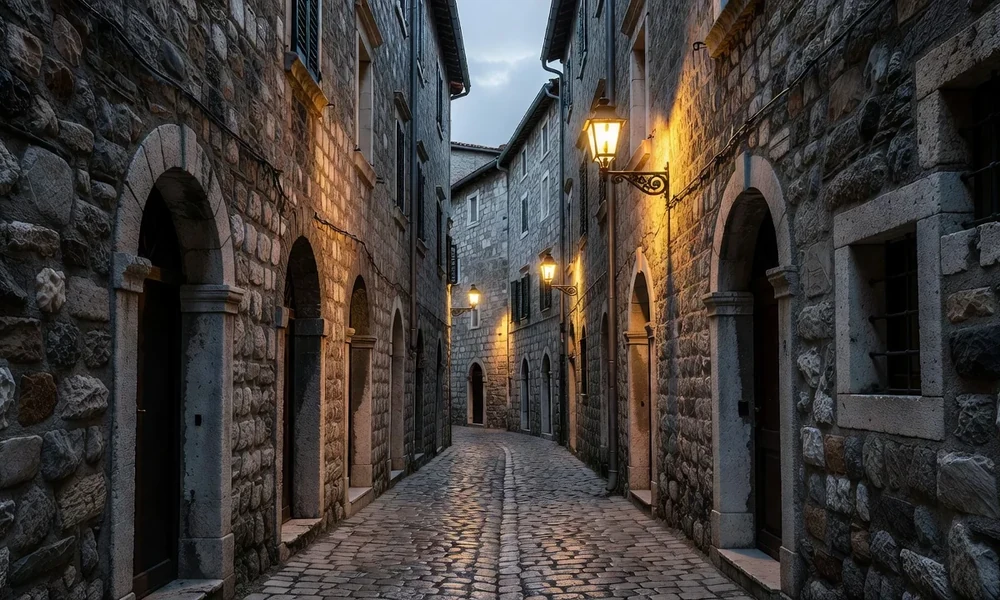
Kotor's layout follows its geography. There is almost no flat land, so the town is squeezed into the narrow strip between the water and the slopes, and its buildings are tall and close together. The result is a place of narrow shaded streets and small squares, designed to make the most of limited space and to shelter from the heat of summer.
The sea gave the town its purpose. As a port within a protected bay, Kotor was well placed for trade and for defence, and the wealth that flowed through it paid for the churches, palaces and walls that still define the town.
The lanes and squares of the old town
Within the walls, the old town is a network of passages that open onto a handful of main squares. In the larger squares there are churches and civic buildings; in the side lanes, small shops, cafes and courtyards. Because the plan is medieval and organic, there is no simple grid, and getting a little lost is part of the experience.
- The old town is compact and entirely walkable.
- Main squares hold the churches and principal buildings.
- Side lanes hide cafes, workshops and courtyards.
- The plan is irregular, so a map helps but is not essential.
Churches and layers of history
Kotor's churches reflect a long and mixed history in which different traditions and rulers followed one another. Several churches and religious buildings stand within the walls, of different ages and styles, and together they show how the town absorbed influences from both the Adriatic and the interior. The cathedral is the most prominent, but the smaller churches are often just as atmospheric.
Beyond the churches, the town preserves palaces, civic buildings and details such as carved doorways, stone balconies and old coats of arms. These fragments reward anyone who looks up while walking, and they are the real texture of a town that has been rebuilt and repaired many times.
The walls above the town
The fortifications are the feature that everyone notices first. From the town they rise in a long line up the mountainside, and the path that climbs them offers the best view of Kotor and the bay. The ascent is steep and made of many steps, and the higher sections pass chapels and platforms before reaching the fortress at the top.
Climbing the walls is the single best way to grasp the geography of the region. From above, the enclosed bay, the surrounding mountains and the position of the town all become clear at once, and the reason this place was fortified so thoroughly is suddenly obvious.
Around the waterfront
Outside the walls, the waterfront and the surrounding districts continue the town's story. Along the shore, quays, boats and waterside buildings keep the connection with the sea alive, and the neighbouring settlements along the bay share the same maritime character. A short walk or boat ride from Kotor leads to places such as Dobrota, whose long waterfront of former captains' houses shows the wealth that seafaring brought.
This wider setting matters, because Kotor is not an isolated monument but the centre of a populated, working bay. Its old town makes most sense when seen as part of that larger landscape of water, towns and mountains.
Kotor Old Town in brief
| Element | Description | What to know |
|---|---|---|
| Position | Head of the Bay of Kotor | Between water and mountain |
| Old town | Compact walled core | Explored on foot |
| Walls | Fortifications above the town | Steep stairway to the top |
| Heritage | Part of the Kotor World Heritage region | Inscribed in 1979 |
| Character | Maritime and trading history | Layered architecture |
Practical notes for a visit
Kotor can be busy in the height of summer, especially when cruise ships are in port, so early mornings and evenings are the most pleasant times to walk the lanes. The town is exposed to strong sun in the middle of the day, and the climb up the walls is best attempted when it is cooler. Comfortable shoes are essential, because the streets are paved with stone and the climbs are steep.
Because Kotor is a living town and part of a protected region, the usual courtesies apply: respect the quiet of residential lanes, dress appropriately when visiting churches, keep to the paths on the walls and take away your litter. Treated with care, it is one of the most rewarding places in Montenegro.
Why Kotor stays in the memory
Kotor compresses an entire chapter of Adriatic history into a small walled town at the head of an extraordinary bay. Its churches, squares and palaces show centuries of maritime prosperity; its walls show the need to defend it; and its setting, between still water and high mountain, gives the whole place a drama that photographs only partly capture. For many visitors it becomes the highlight of a trip along the coast.
Read next
Budva Old Town and the Riviera
A small fortified peninsula and the long stretch of coast that carries its name.
Herceg Novi
A hillside town of steps and gardens guarding the entrance to the Bay of Kotor.
Perast and Our Lady of the Rocks
A baroque waterfront of captains’ houses and an island church in the bay.